AI Research Engineer
PhD in Computer Science with 5+ years turning computer vision research into reliable clinical systems, from pathology detection in 3D CT scans to remote orthodontic monitoring.


AI Research Engineer @ DentalMonitoring

I design and deploy the computer vision systems that power remote orthodontic monitoring, transforming raw patient data into reliable clinical insights for doctors worldwide.
- Improved an attachment-loss detection model processing around 50,000 photo sets per day, covering data collection, cleaning, training, threshold selection, and production testing.
- Cut manual validation workload by 90%, while sending positive detections directly to doctors and reducing production costs.
- Refactored the production pipeline codebase supporting 60+ models, improved automated testing, and fixed bugs in the 2D pipeline.
- Centralized the configurations of all production neural networks, making their settings easier to review and maintain.
PhD Candidate | Machine Learning Engineer @ Philips Health Technology Innovation - AI Research Hub France
 Supervisors: Pr. Loic Boussel, Dr. Nicolas Villain
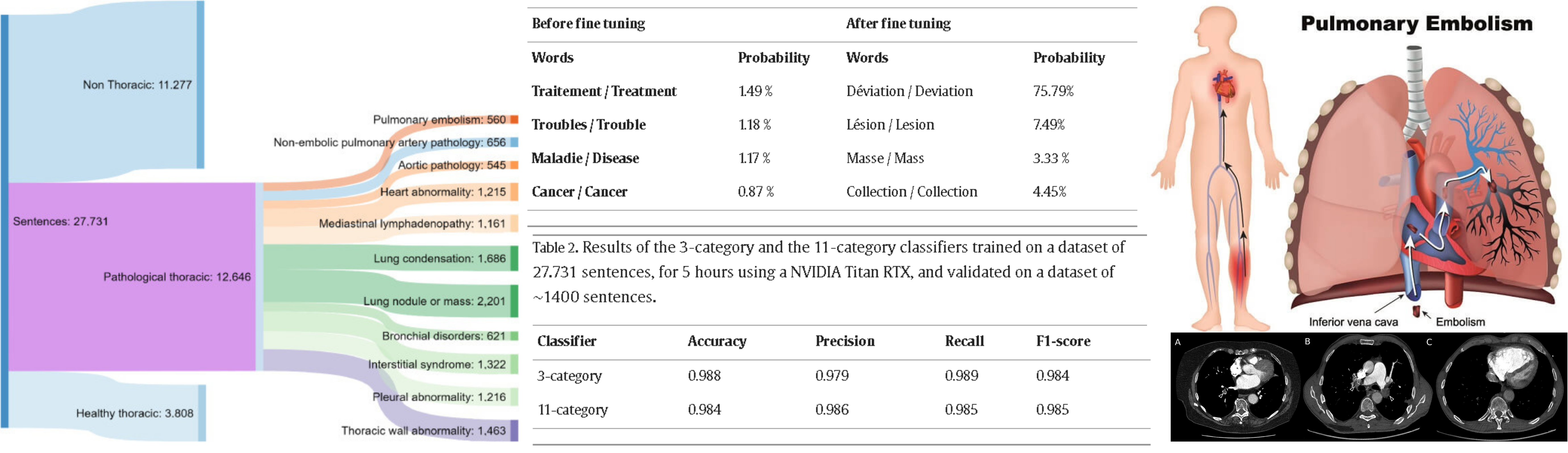
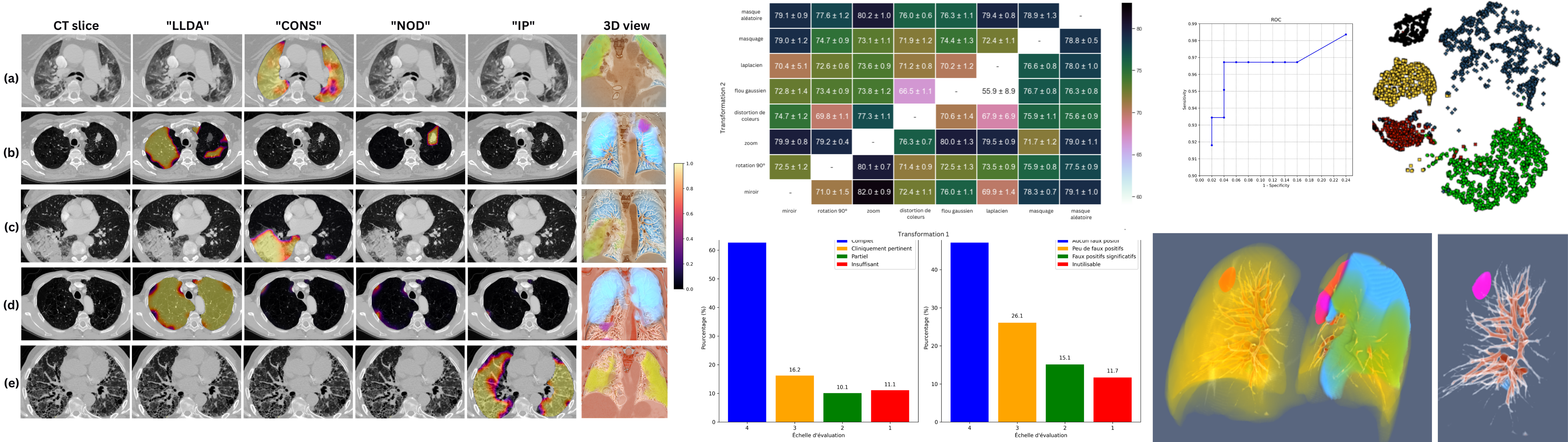
I completed a CIFRE PhD in collaboration with Philips Health Technology Innovation, INSA Lyon, and Hospices Civils de Lyon (HCL), under the supervision of Prof. Loïc Boussel, Dr. Nicolas Villain, Dr. Olivier Nempont, and Dr. Alexandre Popoff. My research explored the development of AI-driven pathology detection systems for conventional CT scans, combining computer vision, medical imaging, and deep learning. Working closely with teams in healthcare and research, I contributed to the design of automated tools that could potentially improve the precision and efficiency of clinical workflows. This research led to several publications, and I gained valuable experience in Python and deep learning frameworks throughout the process.
Computer Vision and Deep Learning Intern @ GE Healthcare
 Supervisors: Pr. Serge Muller, Dr. Andrei Petrovskii
Investigation of automatic search methods for neural network hyperparameters (Neural Architecture Search).
Application to Mammographic Data within WHARe team (Women’s Health Applied Research)
During my internship, I collaborated with experts to advance mammography systems for clinical diagnosis, focusing on the application of deep learning techniques to enhance the accuracy of mammographic data classification. Specifically, we explored the potential of a gradient-based Neural Architecture Search (NAS) method, DARTS (Differentiable Architecture Search), to optimize model performance for classification tasks. Through extensive experimentation, we successfully achieved state-of-the-art results, surpassing existing models in mammography classification. This project not only provided valuable hands-on experience with AI-driven research but also inspired my decision to pursue a PhD in medical imaging and deep learning.
Featured Publications
Conferences & Summer Schools
16th IEEE International Conference on Signal Processing (ICSP)
21 - 24 October 2022
Beijing, China
Tailored 3D CT contrastive pretraining to improve pulmonary pathology classification
A. Djahnine, A. Popoff, E. Jupin-Delevaux, V. Cottin, O. Nempont, L. Boussel
Oxford Machine Learning Summer School (OxML 2023) (ML x Health Track, In Person)
Certificate of Participation
13 - 16 July 2023
Oxford, United Kingdom
Honors & awards
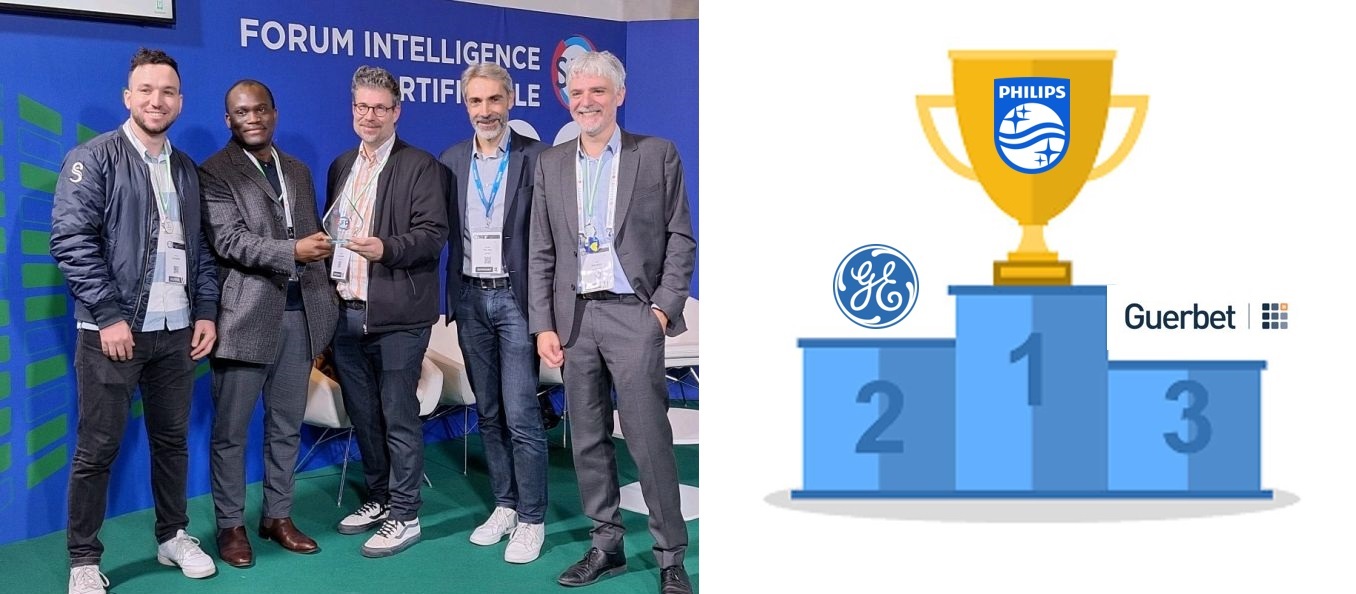
JFR 2023 Data Challenge WINNER: Pancreatic masses detection in 3D CT scans
- I was a member of the Philips team in collaboration with Hospices Civils de Lyon that won the JFR (les Journées Francophones de Radiologie) data challenge. The solution used deep learning-based algorithm to detect pancreatic masses in 3D CT scans.
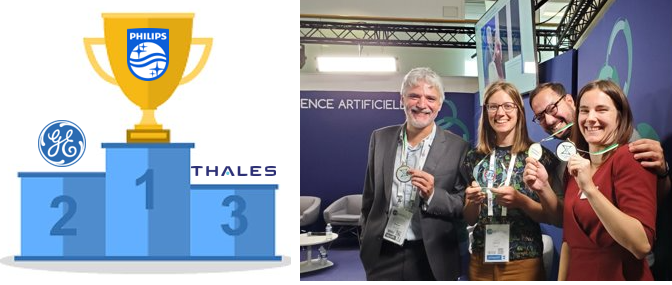
JFR 2022 Data Challenge WINNER: Pulmonary embolism detection in 3D CT scans
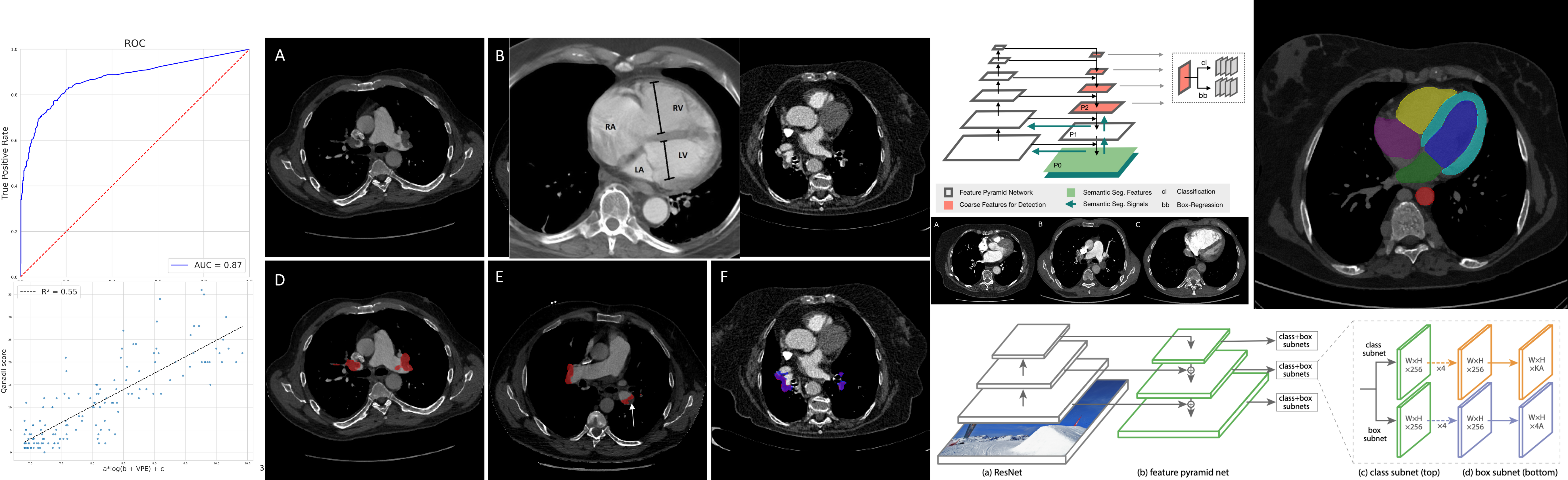
- I was a member of the Philips team in collaboration with Hospices Civils de Lyon that won the JFR (les Journées Francophones de Radiologie) data challenge. The solution used deep learning for computer vision to detect pulmonary embolism in CT scans. (Challenge Paper, Our Solution (Journal Paper))
Personal